FARFALLE joint project Intelligent control in the event of grid bottlenecks in the electricity distribution grid
Project period: 10/2025 – 09/2028
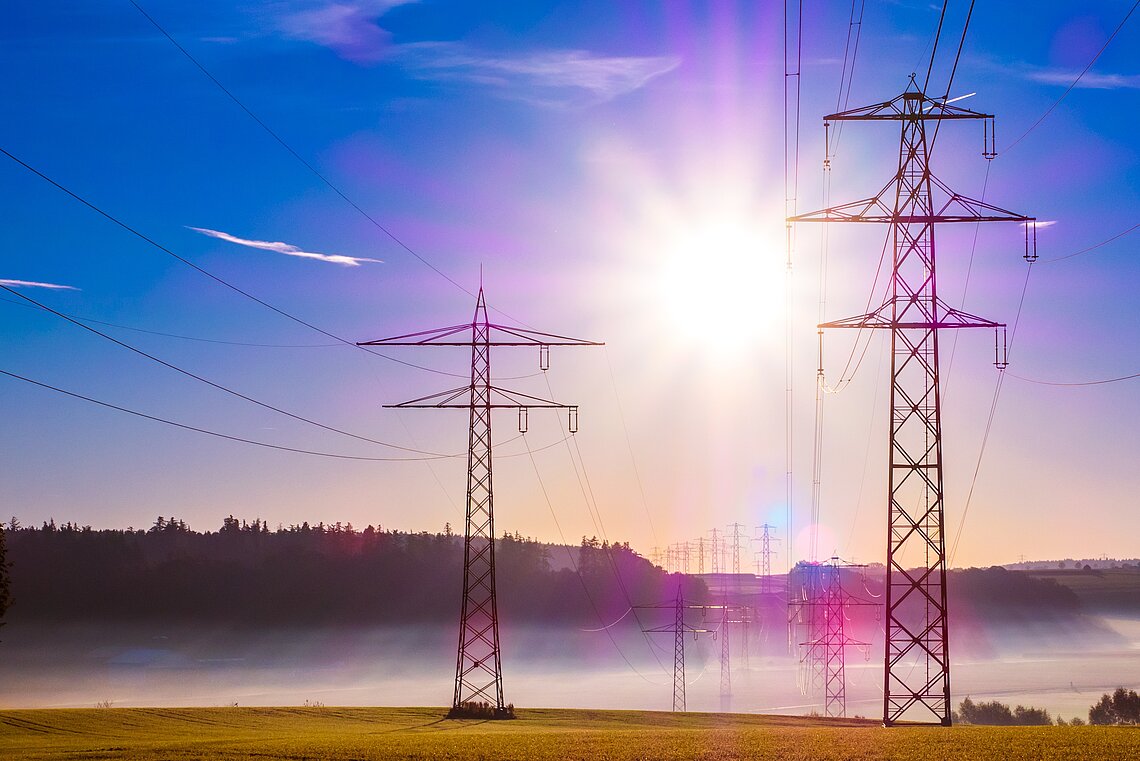
How can the flexibility of controllable consumers such as charging stations and heat pumps be used to resolve grid bottlenecks in the distribution grid as efficiently as possible? This is the core question of the FARFALLE funding project, in which a fairness factor for practical control in curative congestion management is being developed. This has the potential to lower the need for grid expansion and thus reduce the costs of the energy transition.
With the introduction of Section 14a of the German Energy Industry Act (EnWG), distribution system operators (DSOs) are permitted to temporarily reduce the power output of controllable consumers, such as charging stations and heat pumps, in order to alleviate grid congestion. In doing so, the power reduction is applied equally across all controllable consumers in the affected network area. Following such an intervention, the DSO is obligated to expand the grid.
In the FARFALLE project (Fairness Factor for Intelligent Congestion Management, funding code: 03EI6136A), the funding partners Hamburger Energienetze GmbH (HNE), the Hamburg University of Applied Sciences (HAW), and hysolutions are jointly developing a so-called Fairness Factor. This factor ensures that only those controllable consumers in a grid segment that are best suited to resolve the respective grid congestion need to be dimmed. The Fairness Factor is a metric that assigns a value to each individual controllable consumer, expressing the suitability of the respective system for resolving the critical grid condition and taking into account both the efficiency and the fairness of a potential control action.
For each potential grid congestion, the controllable loads in the respective grid segment can thus be ranked in a sort of merit order, ensuring that exactly those systems are dimmed which, according to this prioritization logic, are necessary to resolve the grid congestion. This enables the distribution system operator to carry out remedial control actions in a more targeted and intelligent manner, ensuring that as few customers as possible are affected by power reduction.
The development of the fairness factor within the FARFALLE framework is approached from four perspectives:

hysolutions will serve as the consortium leader and is responsible for the regulatory perspective. This involves assessing the extent to which the curative control mechanism developed in the project can operate within the legal framework of Section 14a of the Energy Industry Act (EnWG) or whether regulatory adjustments are necessary. In the project, hysolutions will coordinate and formulate recommendations for legal interpretation guidelines and ultimately develop a guide for distribution network operators on practical control measures in curative congestion management. The goal is to develop an industry-wide accepted solution that effectively translates the legal framework of Section 14a of the German Energy Economy Act (EnWG) into practice.
In addition to the funding partners—Stadtwerke Saarlouis GmbH, EWE NETZ GmbH, Westfalen Weser Netz GmbH, and NGN Netzgesellschaften Niederrhein mbH—the interdisciplinary project consortium includes other stakeholders from the energy sector who will contribute their specific requirements over the course of the project.
FARFALLE is funded by the Federal Ministry for Economic Affairs and Energy with approximately 1.9 million euros as part of the 8th Energy Research Program.